Leading Swiss banks—PostFinance, UBS, and Sygnum—have teamed up to explore the feasibility of a digital Swiss franc.
The initiative, spearheaded by the Swiss Bankers Association (SBVg), aims to modernize Switzerland’s financial system and enhance its competitive edge in the digital economy.
## Blockchain-Based Digital Franc
The project, known as “Digitale Währungen,” or “Digital Currencies” in English, has gained support from major Swiss banks, which signed a memorandum of understanding (MoU) to conduct a Proof of Concept (PoC) for a digital Swiss franc deposit token.
A deposit token, as defined in the MoU, is a blockchain-based payment method that reflects traditional deposits. It enables bank customers to conduct transactions on a new and innovative payment platform using distributed ledger technology (DLT) and smart contracts.
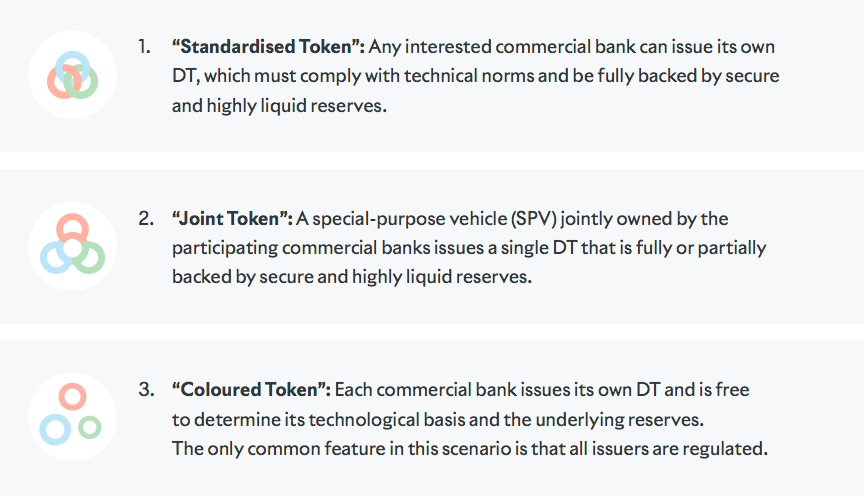
Initially, the Deposit Token PoC will focus on two use cases: simple payments between participating banks and delivery versus payment transactions with escrow functions.
A successful PoC, according to the Swiss Bankers Association, could pave the way for the widespread adoption of a digital Swiss franc, offering benefits such as faster and cheaper transactions, enhanced security, and new financial products and services.
## A Collaborative Effort
The MoU among the Swiss banks aims to address the need for coordination within the broader context of the Swiss Bankers Association’s work on digital currencies.
Firstly, the banks that signed the MoU intend to “design, execute, and assess an initial Deposit Token PoC.”
Secondly, the banks will collaborate to address any legal or operational challenges that may arise during the project and evaluate the potential benefits and challenges of a nationwide rollout of a digital Swiss franc, considering “technical, legal, economic, risk, and operational factors.”
The Deposit Token PoC project is expected to be completed in 2025.
## Blockchain-Powered Banking
PostFinance, UBS, and Sygnum are piloting a blockchain-based system to see if they can migrate customer deposits, which are fundamental to banking operations.
Remo Nyffenegger, an economist at the University of Basel, commented on these plans, noting that this is a more radical step compared to cantonal banks allowing their customers to invest in Bitcoin (BTC) and other digital assets. It’s about banks employing the underlying technology themselves or even building services directly on a public blockchain like Ethereum.
“As far as I know, this is the first time that deposit money has been issued directly on a blockchain. It’s a very innovative move by the Swiss banks,” Nyffenegger said.
However, there are significant regulatory hurdles to overcome, such as determining the rules for cross-border use and the required backing of assets. If they opt for a public blockchain, as suggested in their whitepaper, it would be revolutionary. Transactions on public blockchains are transparent to everyone.
## Swiss Banks Adopt Crypto Trading
In addition to the digital franc initiative, Swiss banks are also actively involved in cryptocurrency trading.
Zurich Cantonal Bank (Zürcher Kantonalbank, or ZKB), one of the largest banks in Switzerland, has become the latest financial institution to offer cryptocurrency trading services to its customers. Starting on Sept. 4, ZKB customers can trade Bitcoin and Ether (ETH) around the clock directly through the ZKB eBanking or ZKB Mobile Banking platforms.
> Ab heute ermöglicht die Zürcher Kantonalbank den Handel und die sichere Verwahrung von #Bitcoin und #Ethereum. Das Angebot ist nahtlos in die bestehenden Kanäle integriert und richtet sich gleichermassen an Kundinnen und Kunden sowie an Drittbanken: https://t.co/IbKw9o1aqk pic.twitter.com/1CjPS1A3Mg
> — Zürcher Kantonalbank (@zkb_ch) September 4, 2024
In recent months, several Swiss cantonal (government-owned commercial) banks, including Zuger Kantonalbank, St. Galler Kantonalbank, and Luzerner Kantonalbank, have also successfully launched cryptocurrency services.